

Reativação do Vanguard 1: EUA buscam recuperar satélite pioneiro da era espacial
2025-04-08Recurso de resumo diário da One UI 7: como a inteligência artificial pode ajudar a organizar sua rotina
2025-04-08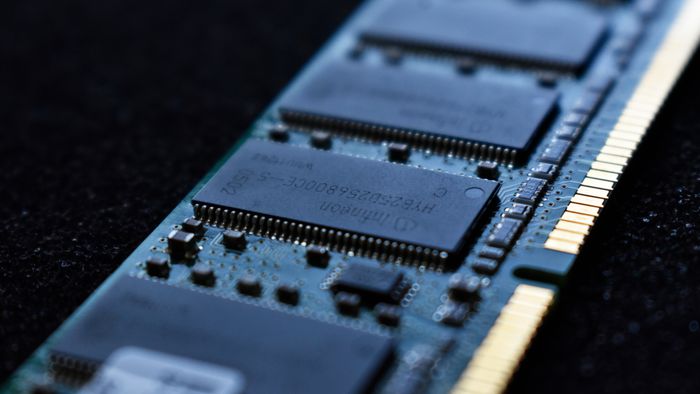
Here is the rewritten text:
A German memory manufacturer has developed a technology that combines the speed of RAM with the storage capacity of an SSD using a new technique. Ferroelectric Memory, in partnership with Neumonda, has advanced the production of DRAM+, a non-volatile memory designed for specific applications.
- What is RAM memory?
- How to discover the size, type, and frequency of your PC’s RAM?
The company’s expertise lies in using hafnium oxide, which only retains data when powered by energy. By replacing a standard DRAM capacitor with a non-volatile version, this memory achieves higher performance and efficiency.
According to Ferroelectric Memory, DRAM+ has the potential to be used in a wide range of applications across various segments of the technology industry, including AI, automotive, industrial, and medical.
“FMC was founded to explore the revolutionary invention of the ferroelectric effect of HfO2 for semiconductor memories. Applied to a DRAM, it transforms the DRAM capacitor into a non-volatile, low-power storage device, maintaining the high performance of DRAM to produce an innovative, non-volatile DRAM memory, ideal for AI computing,” explained Thomas Rueckes, CEO of FMC.
DRAM+ to have large storage capacity
Called FeRAM, the technique, which previously used zirconate titanate, was limited in storage capacity, ranging from 4 MB to 8 MB due to integration issues. However, hafnium oxide is compatible with CMOS and operates well below 10 nm, making it possible to integrate it into standard semiconductor industry processes. As a result, storage capacities in the gigabyte range are expected, although no specific value has been disclosed.
Let me know if this meets your requirements!


