

SSD para jogos de alta performance: Kingston Fury Renegade de 1 TB com desconto exclusivo
2025-05-02Mais de 3 bilhões de pessoas utilizam o WhatsApp todos os meses, de acordo com dados recentes divulgados pela Meta.
2025-05-02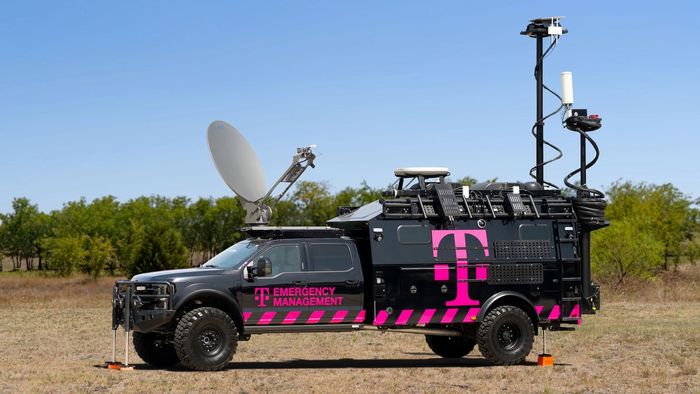
T-Mobile, a US telecommunications operator, has introduced new technologies to withstand extreme weather events as storms and hurricanes. The goal is to keep users connected during outages. Among the solutions, the company is adopting mobile antennas mounted on trucks These vehicles will drive to points that have lost signal to maintain connectivity until the common network is restored.
Outra novidade é a Self-Organizing Network (SON), which uses artificial intelligence to interpret real-time data, detect problems, and adapt automatically.
Features include detection of tower falls and automatic antenna adjustment. There is also traffic redistribution to avoid congestion in these situations.
According to T-Mobile, the network made over 121,000 automatic adjustments during Hurricanes Helene and Milton. 99% of the network was restored within 72 hours.
In the California wildfires, there were over 12,000 adjustments, and 99% of the network was restored.
The company offers satellite-based communication via a partnership with Starlink. According to T-Mobile, over 500,000 messages were sent via satellite. This occurred during recent hurricanes and wildfires in the US.
However, satellite communication only works on recent smartphone models, mainly advanced lines. The models include or newer iPhone 14, Galaxy S24, Galaxy A36, and latest-generation Samsung foldables.
T-Mobile wants to anticipate technical failures, citing technology that detects threats in real-time at the company’s Operations Centers. This allows monitoring severe weather and potential risks to infrastructure.
The company has a fleet of response vehicles, which has been updated. T-Mobile now has XL SatCOWs and XL SatCOLTs, which are utility vehicles equipped with mobile satellite equipment.
The operator has also created T-Priority service, a dedicated network band for rescue teams in the US. This resource prioritizes critical communications, increasing speed and reducing latency for tools used by rescuers.
Although it has demonstrated its performance in the US, T-Mobile does not have a direct operation in Brazil.
T-Mobile’s advanced network technologies ensure customers stay connected during extreme weather events.


