

Fones de ouvido Galaxy Buds por preço acessível: aproveite a oferta relâmpago com desconto especial
2025-03-25Descubra o Futuro dos Jogos: A Nova Interface do Xbox em 2025
2025-03-25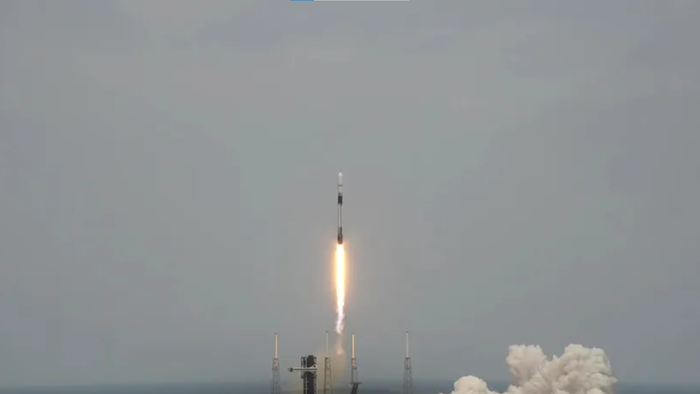
Here is the rewritten text:
The SpaceX launched its third mission for the National Reconnaissance Office of the United States, the country’s spy satellite agency. What makes this mission even more special is that it took place when the aerospace company founded by Elon Musk celebrated 19 years since its first space launch.
- New satellite can see inside buildings
- SpaceX launches spy satellites for the US and breaks record with Falcon 9
The Falcon 9 rocket took off from the Space Force Station at Cape Canaveral at 2:48 PM Brasilia time, marking the start of the NROL-69 mission. SpaceX did not disclose information about the orbit where the payload would be placed and cut off the transmission of the launch shortly after the Falcon 9’s stage landed, about nine minutes after the mission began.
Watch Falcon 9 launch the @USSF_SSC and @NatReconOfc’s NROL-69 mission from pad 40 in Florida https://t.co/9WH2CJgztr
— SpaceX (@SpaceX) March 24, 2025
It’s unclear what the payload was on the vehicle, as the only information the NRO provided about the mission only describes its emblem. “The hummingbird illustrates the speed and agility with which we provide an advantage to the nation and its allies,” they explained. “’Numquan hibernare’ means ‘Never hibernate’ in Latin. Our bird is always vigilant,” they concluded.
This secretive mission took place 19 years after SpaceX’s first space launch, which sent the Falcon 1 rocket into space from the South Pacific. That mission, as well as the next two flights of the vehicle, failed.
In 2008 and 2009, the Falcon 1 flew successfully on its fourth and fifth missions. After that, the launcher was retired to make way for the Falcon 9, which was first launched in June 2010.
Read also:
- Russia launches spy satellite to snoop on US rival
- Russian satellite returns to Earth and burns up like a fireball in the sky; watch video
Video: How does Starlink work?


