

Microsoft apresenta soluções de inteligência artificial personalizáveis para empresas
2025-05-19Dell Desenvolve Computador com Capacidade de Processar Inteligência Artificial Localmente, Permitindo Uso de Tecnologias Avançadas sem Conexão à Internet
2025-05-19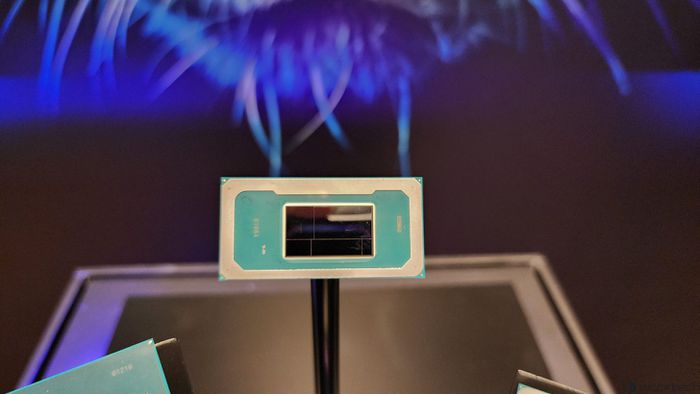
Here is the rewritten text:
Besides unveiling its new professional-grade GPUs, Intel also dedicated a moment at Computex 2025 to showcase its mobile Panther Lake CPUs. The company demonstrated several laptops equipped with these processors, showing off AI tests, development kits in action, and some official specifications for the first time.
- 3 Best Intel Processors for Gaming in 2025
- Most Important Features in Intel Processors
- 10 Iconic Games Released in 1997
- 10 Most Expensive Videogames in History
- What are Shareware Games? How Free Titles Changed the Industry
According to reports from WCCFtech and Tom’s Hardware, Intel stated that the new processors, to be called Core Ultra 300, combine the efficiency of Lunar Lake with the performance of Arrow Lake-H. This means that the 18A lithography allowed for increased performance while maintaining low energy consumption.
Intel reiterated that the Panther Lake CPUs will start mass production in the second half of this year, with a consumer launch expected in early 2026, likely during the CES 2026.
Specifications of Intel Panther Lake
Although no exact numbers were revealed, tech portals claim that the new notebook processors deliver more AI performance compared to the Core Ultra 200, as expected. Since there has been no official revelation of the Panther Lake series, we still don’t have exact data.
The Core Ultra 300 mobile processors will have efficient Darkmont and high-performance Cougar Cove cores. It is also expected that they will be equipped with integrated graphics based on Xe3 “Celestial,” the next-generation Intel graphics, which will also power the next-generation Intel graphics cards.
During the event, a fully exposed Panther Lake chip was revealed, showing the division of computation, SOC, and IO tiles. Furthermore, validation machines, which simulate the use of an unreleased CPU, were also showcased, along with notebooks demonstrating the Task Manager on Windows, showing a 16-core CPU operating at 1.40 GHz, equipped with 18 MB of L3 cache, 24 MB L2, and 1.6 MB L1.
See more from Tech Insights:
Stay tuned for more news on our Tech News channel.


